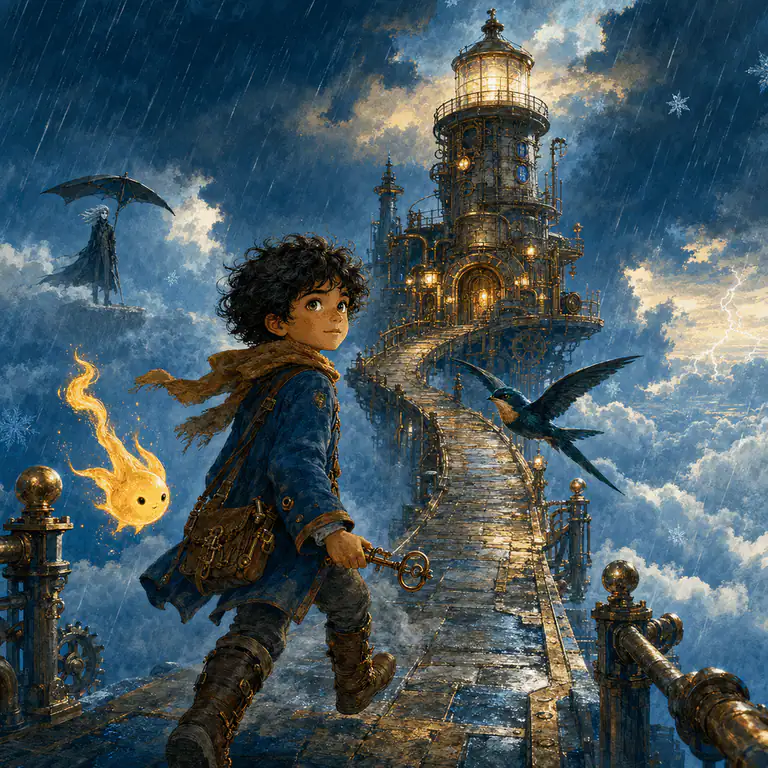
Aeravi and the Lighthouse Above the Rain
A 96-page sky adventure in two connected parts, where Aeravi must repair broken weather and confront the Heart of Stillness.
Explore Aeravi and the Lighthouse Above the Rain →
Marty TalefoxStory WorldsBooks by theme · Responsibility
Responsibility becomes meaningful in a story when a choice has consequences and a character has a real reason to care. These books explore keeping promises, looking after something important, repairing mistakes, and learning that responsibility can include asking for support.
Stories to explore
This collection focuses on choices, consequences, care, and following through without demanding perfection. The books approach the idea through different characters and situations, so children can compare choices rather than receive one fixed lesson.

A 96-page sky adventure in two connected parts, where Aeravi must repair broken weather and confront the Heart of Stillness.
Explore Aeravi and the Lighthouse Above the Rain →
Ten richly illustrated adventures in one 96-page collection about courage, kindness, and bringing the sleeping garden home again.
Explore Lumari and the Garden of Sleeping Lights →
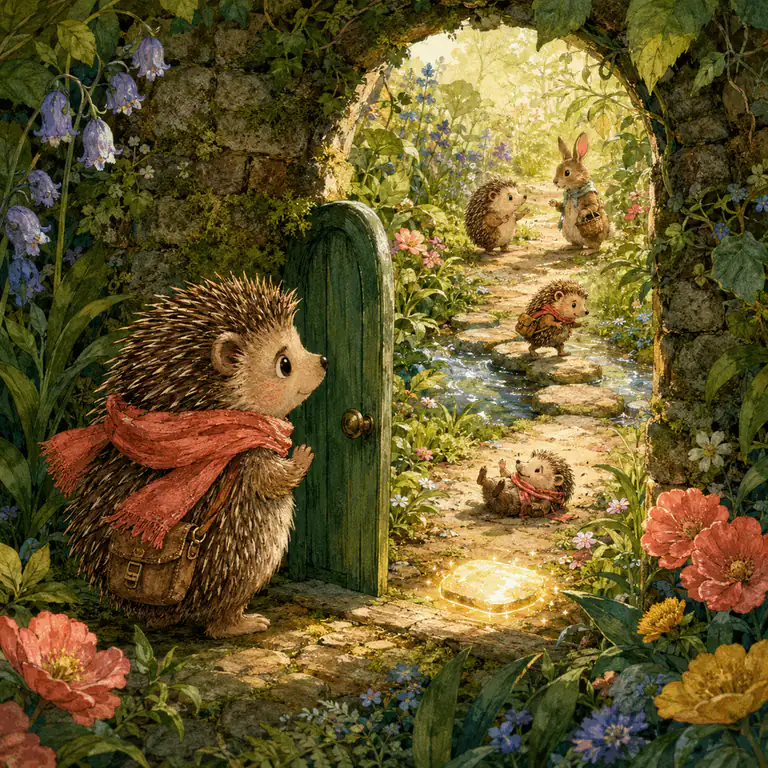
Behind a tiny garden door, courage grows one gentle step at a time.
Explore Jorali and the Door of Small Braveries →
When the sea grows still, Coraquill helps a forgotten tide find the way back to the shore.
Explore Coraquill and the Tide That Forgot to Return →A gentle guide for grown-ups
Responsibility in a story is easier for children to understand when it is tied to something a character genuinely cares about: a promise, a place, another person, or a task that cannot simply be ignored. Follow the chain from choice to consequence rather than starting with the word ‘responsible’. Children can then see what was within the character’s control and what was not.
It is equally useful to notice when responsibility includes changing course or asking for support. A character who admits a mistake, repairs what can be repaired, or shares a task is not avoiding responsibility. The story can show that being dependable is different from carrying everything alone or getting everything right the first time.
Ask which part of the problem the character could influence and which part depended on circumstances or other people.
When something goes wrong, notice whether the character hides it, fixes it, asks for help, or makes a new plan.
Instead of asking what the character ‘should have done’, ask what a fair next step would be now.

For families
They turn responsibility into visible actions: keeping a promise, caring for something, returning to a task, admitting a mistake, or making amends after a choice has consequences.
Yes. Recognising that a task is too large and finding appropriate support can be a more responsible choice than pretending to manage alone.
Not necessarily. A useful ending may show repair, learning, or a better decision even when the original result cannot be completely fixed.
This collection includes Aeravi and the Lighthouse Above the Rain, Lumari and the Garden of Sleeping Lights, Jorali and the Door of Small Braveries, Coraquill and the Tide That Forgot to Return.
From the journal
Why courage in stories can be small, honest and possible.
Read the article →